About the Cause
Why mental health literacy matters for young people. We believe that understanding the mind is a skill in itself.
Mental health is often discussed,
but rarely
explained.
Many students hear terms like "anxiety," "cognitive distortion," or "grounding" without truly understanding the mechanics behind them.
We believe knowledge helps build the path to regulation.
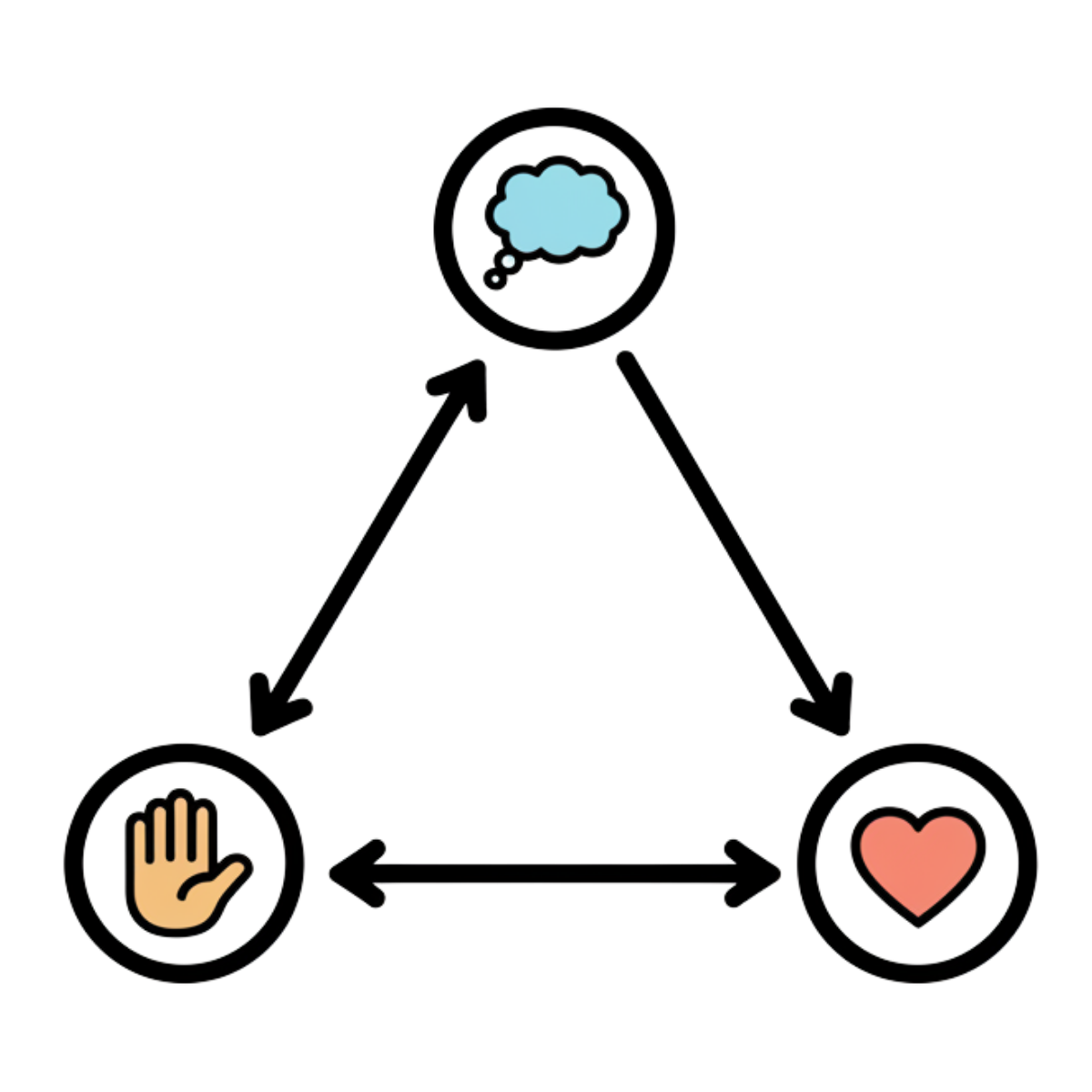
Why Cognitive Behavioral Therapy?
Cognitive Behavioral Therapy (CBT) is one of the most well-researched approaches in clinical psychology. It acts as a user manual for the brain, helping us understand the connection between our thoughts, feelings, and behaviors.
This project focuses on the educational aspects of CBT—concepts that are already publicly documented in textbooks and research papers.
Our Scope
To use this resource effectively, it is important to understand what this project is (and isn't).
- Explain established psychological concepts in accessible language
- Describe the science behind commonly taught CBT skills
- Provide clear, accurate information from published research
- Build mental health literacy through education
- Provide therapy, counselling, or treatment
- Diagnose mental health conditions
- Offer crisis support or intervention
- Replace professional mental health care
Why Literacy Matters
Research shows that knowing about mental health—recognizing warning signs and understanding available options—reduces stigma and improves outcomes.
Identify patterns in your own thinking and emotional responses.
Talk about mental health with precise, accurate language.
Understand when and how to access professional support.
Help friends and peers more effectively with fact-based empathy.
Start Learning
Ready to see how the "Guard Dog" and "Wise Owl" work together? Browse our collections or dive directly into the skills library.