20-20-20 Eye Break
Overview
Ever feel like your eyes are burning or getting blurry after scrolling or gaming for too long? The 20-20-20 rule is a simple habit to give your eyes a much-needed break. While it is mostly about eye health, it can also help you feel more relaxed and focused when you are working hard on a computer or phone.
How Your Brain Works
Your brain uses two main parts to manage your feelings and your ability to think clearly.
The Guard Dog
The alarm system. Reacts to stress with fight-or-flight responses.
The Wise Owl
Logic and calm decision-making, best accessed when the alarm quiets down.
The Guard Dog (The Alarm)
When your eyes get tired, scratchy, or sore from staring at a screen, your body sends out stress signals. The Guard Dog (amygdala) notices this physical discomfort and starts to bark. It perceives the eye strain as a threat, which can make you feel more anxious, frustrated, or mentally drained. This makes it much harder to stay calm while you are trying to finish your homework.
The Shift (The Relief)
By using the 20-20-20 rule, you are basically giving your body a signal that the pressure is off. When the physical pain goes away, the Guard Dog can stop barking and go back to its kennel. This quiet allows your brain to switch gears and let the Wise Owl take over again.
The Wise Owl (The Focus)
The Wise Owl (prefrontal cortex) is the part of your brain that helps you make good decisions and stay focused. When your eyes feel good, your Wise Owl can work much better. It allows you to concentrate on your tasks without being distracted by blurry vision or a headache. Taking these breaks helps your Wise Owl stay in charge of your attention throughout the day.
How to Use This Skill
Think of this habit as giving your Wise Owl a pair of binoculars and your Guard Dog a comfy pillow to relax on.
- 1
Set the Timer (20 Minutes)
Use a phone alarm or a computer pop-up to remind you it is time to look away from your work for a moment.
After 20 minutes of staring at something close, the tiny muscles in your eyes get tired and tight from staying in one position. - 2
The 20-Second Reset
Stop what you are doing and count to twenty slowly while you focus on something in the distance.
It takes about 20 seconds for your eyes to fully relax and for your natural tears to spread properly over your eyes. - 3
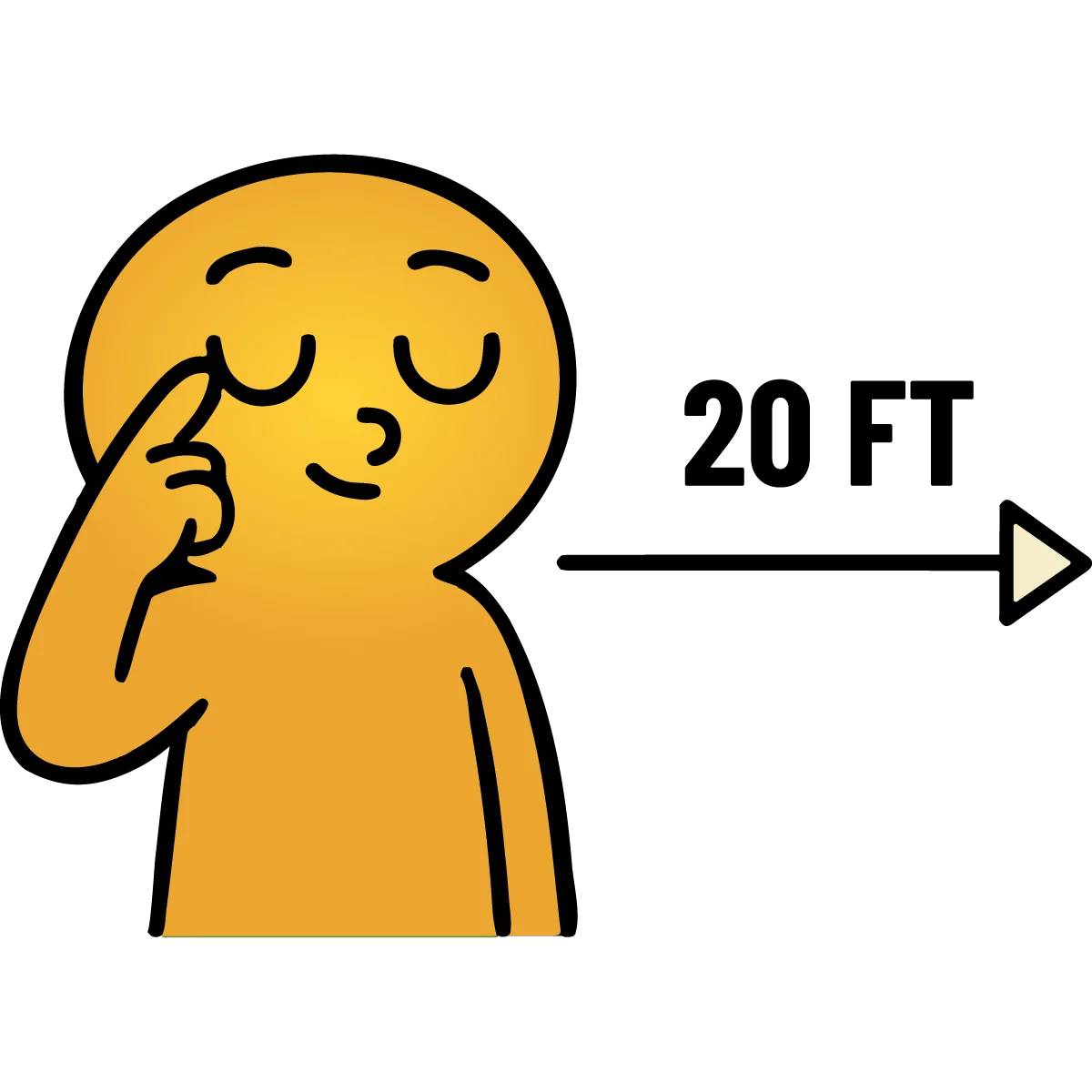
Look 20 Feet Away
Look out a window at a tree or a house across the street to give your eyes a true long-distance break.
Looking at something far away lets your eye muscles completely let go, which is the opposite of the tight feeling of screen work. - 4
Soft Blinking
While looking away, gently blink a few times like you are trying to keep your eyes comfortable and hydrated.
We blink way less when staring at screens, which makes our eyes dry. Soft blinks help spread a protective layer of moisture.
Real-Life Example
Sarah's Screen Break
The Scratchy Eyes
Sarah has been typing an essay for 25 minutes. Her eyes feel tired and scratchy, and her vision is getting a bit blurry.
The Guard Dog Bark
My eyes hurt and I can't focus. I'm never going to finish this on time and I'm going to fail!
- Sarah notices her eyes are tired and remembers the 20-20-20 habit.
- She stops typing and looks out the window at a tree about 30 feet away.
- She counts to 20 slowly while blinking softly to help her eyes feel less dry.
- She feels the tension in her face and eyes start to fade away.
Because her eyes feel better, Sarah's Guard Dog stops barking about the pain. Her Wise Owl can now focus back on her essay without the distraction of a headache.
Practice Tips
Making this a regular habit can save you from those end-of-the-day headaches and help you stay sharp.
- Automatic Reminders
Use an app or a browser extension to prompt you. It is much easier than trying to remember the time yourself.
- True Distance
Make sure you are actually looking far away. Looking at a wall three feet in front of you won't help your muscles relax.
- Screen Height
Keep your screen slightly below eye level. This helps your eyes stay in a more natural, relaxed position while you work.
Pro Tip
Why It Works
This habit reduces the physical stress that makes you feel grumpy or exhausted after a long day of schoolwork.
This skill can help you feel more comfortable because:
- Muscle Relaxation
It lets the tiny muscles in your eyes take a break so they do not get overworked and sore.
- Eye Comfort
By blinking more, you keep your eyes moist and avoid that annoying gritty or burning feeling.
- Better Focus
When your body feels good, your brain can spend more energy on thinking and less on dealing with pain.
References
Research-based evidence supporting this skill
- Major eye health organizations like the American Academy of Ophthalmology recommend this technique to help prevent digital eye strain and keep your vision comfortable.
- American Optometric Association. (2020). 20-20-20 rule and digital eye strain.
- BC Doctors of Optometry. (n.d.). The 20-20-20 Rule: Fact or fiction?
- Clearview Eye Care. (2022). The 20-20-20 Rule: Does It Really Work for Eye Strain?
- Modern Optometry. (2023). Myth-Busting the 20/20/20 Rule.
- National Institutes of Health. (2023). The 20/20/20 rule: Practicing pattern and associations with digital eye strain.
- Ohio State University Health. (n.d.). Relieve computer eye strain by following the 20-20-20 rule.
- Healthline. (2023). 20-20-20 Rule: Does It Help Prevent Digital Eyestrain?