Calf Pump Reset
Overview
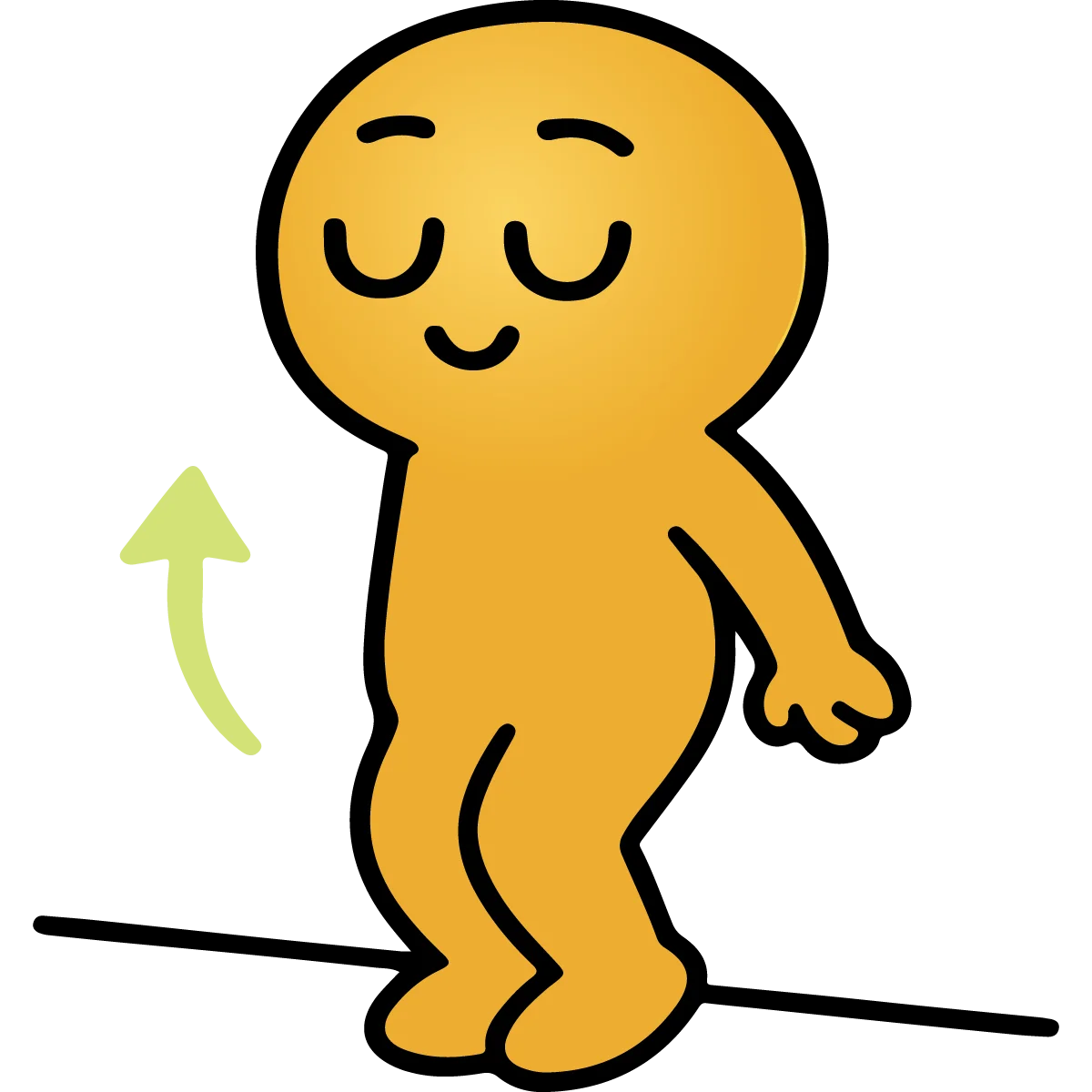
Ever feel like your brain is in a fog after sitting for too long? The Calf Pump Reset is a quick physical trick to get your blood moving. By simply standing up and using your leg muscles, you help your body push fresh oxygen back up to your head. It is a natural way to refresh your energy and help you feel more grounded when things get stressful or tiring.
How Your Brain Works
Your brain uses two main parts to manage your feelings and your ability to think clearly.
The Guard Dog
The alarm system. Reacts to stress with fight-or-flight responses.
The Wise Owl
Logic and calm decision-making, best accessed when the alarm quiets down.
The Alarm (The Guard Dog)
When you sit for a long time or feel stressed, your circulation can slow down. Your Guard Dog (the amygdala) is like a sensitive alarm. If it notices your body feels tired or sluggish from poor blood flow, it might start barking. This can make you feel anxious, irritable, or completely overwhelmed.
The Shift
By rising onto your toes, you activate what scientists call the calf muscle pump. This acts like a second heart, squeezing your veins to push blood back up to your brain. This physical movement sends a signal to the Guard Dog that everything is okay, which helps to lower the volume on that stress alarm and reduces that heavy, tired feeling in your body.
The Wise Owl
As that fresh, oxygen-rich blood reaches the top floor of your brain, your Wise Owl (the prefrontal cortex) gets the fuel it needs to work properly. This part of your brain is the boss of focus and mood. When the Wise Owl is powered up, you can think clearly, stay focused on your goals, and handle big feelings without feeling like you are going to crash.
How to Use This Skill
Think of this like giving your brain a quick battery recharge using your legs as the charger.
- 1
Stand tall
Find a flat spot on the floor and stand with your feet shoulder-width apart, looking straight ahead.
Standing upright helps your blood flow more naturally by working with gravity instead of against it. - 2
Rise up onto your toes
Slowly lift your heels off the ground until you are balancing on the balls of your feet.
This squeezes your leg muscles, which acts like a pump to send blood zooming back up toward your heart and brain. - 3
Slowly lower your heels
Take about three seconds to let your heels touch the floor again, feeling the stretch in your calves.
Moving slowly keeps your circulation steady and helps your veins keep the blood moving in the right direction. - 4
Repeat 10 times with steady breaths
Keep a steady pace and breathe in through your nose and out through your mouth as you move.
Doing this ten times provides enough movement to improve sleep quality and lower daytime tiredness.
Real-Life Example
Resetting After a Big Test
The Brain Fog
You just finished a two-hour math exam and your heart is racing, but your head feels like it is full of cotton.
The Guard Dog Bark
I am totally burnt out. I cannot do anything else today and I am going to fail my next project.
The Breakdown
- Stand up beside your desk to get into a neutral posture.
- Take a deep breath to centre your focus.
- Rise up on your toes slowly, feeling the squeeze in your legs.
- Lower back down even slower, counting to three.
- Repeat this ten times while focusing on your breathing.
The extra oxygen calms the Guard Dog's barking and helps the Wise Owl take over so you can focus on your next task without crashing.
Practice Tips
You can use this skill almost anywhere to help manage your energy throughout the day.
- Transition Time
Try doing this while waiting for the microwave or standing in line to make it a habit.
- Deep Breathing
Pair the movement with slow belly breaths to help your body feel even more relaxed.
- Mood Tracking
Notice how you feel before and after the 10 reps to see the difference in your energy levels.
Pro Tip
Why It Works
This skill is a simple, no-cost way to boost your mood and energy using just your own body.
This skill helps because:
- Better Blood Flow
It helps your body move oxygen around more effectively, which supports your brain's thinking power.
- Better Sleep
Using your calf muscles can improve how well you sleep, making you feel less grumpy the next day.
- Calm Body
The physical movement helps settle the stress response in your body by providing a steady rhythm.
References
Research-based evidence supporting this skill
- This technique is based on research into the calf muscle pump, showing it can significantly improve sleep quality and reduce daytime tiredness.
- Hayasaka, S., Shibata, Y., Sato, M., & Asada, T. (2018). Association of calf muscle pump stimulation with sleep quality in Japanese adults. Journal of Physical Therapy Science, 30(5), 701-705.
- O'Sullivan, J., & Atkin, L. (2020). Using a muscle pump activator device to stimulate healing for non-healing venous leg ulcers. British Journal of Nursing, 29(12), S18-S24.
- Zhu, Y., et al. (2023). Calf muscle pump tensing as a novel maneuver to improve the management of orthostatic hypotension. Frontiers in Neurology, 14, 1116764.