Self-Kind Sentence
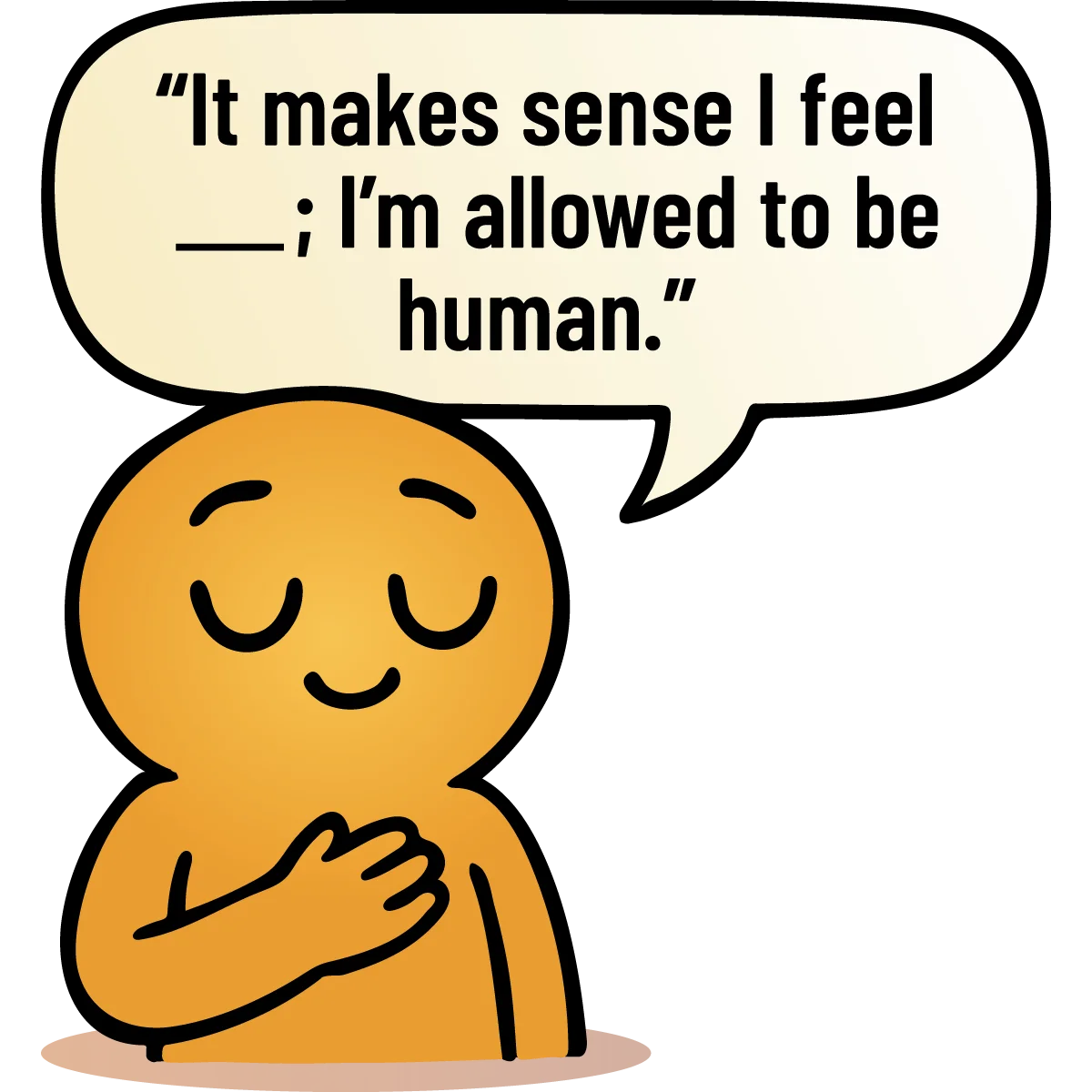
Overview
Self-kindness is a practical way to support your own well-being by choosing helpful words over harsh self-criticism. It involves treating yourself with the same care and understanding you would offer a good friend who is struggling. By acknowledging your feelings and accepting that making mistakes is a normal part of life, you can lower your stress levels and keep yourself from feeling overwhelmed. This approach helps you stay balanced even when things do not go as planned.
How Your Brain Works
Your brain uses two main parts to manage your feelings and your ability to think clearly.
The Guard Dog
The alarm system. Reacts to stress with fight-or-flight responses.
The Wise Owl
Logic and calm decision-making, best accessed when the alarm quiets down.
The Guard Dog Barks
When you make a mistake or start being hard on yourself, the Guard Dog spots what it thinks is a threat. It starts barking loudly, sending stress signals through your body. This is why your heart might race or your stomach might feel tight when things go wrong. The Guard Dog is trying to protect you, but its constant noise makes it hard to think clearly or stay calm. It sees your own self-criticism as a danger, which keeps you stuck in a loop of feeling upset.
The Wise Owl Steps In
The Wise Owl is the leader that keeps things in balance. While the Guard Dog is busy reacting, the Wise Owl looks at the situation with logic and perspective. It uses kindness to understand what is actually happening instead of just reacting to the fear. When the Wise Owl is in charge, you feel more capable and less overwhelmed by big emotions. It allows you to see that one mistake does not define your whole life.
Finding the Calm
Saying a self-kind sentence is like giving the Guard Dog a signal that everything is okay. It helps quiet the noise so the Wise Owl can regain control of the situation. By validating your feelings and accepting your mistakes, you strengthen your Wise Owl's ability to lead. This shift lowers the stress chemicals in your body and allows you to handle tough moments with much more ease and confidence.
How to Use This Skill
Think of this skill as a way to help the Wise Owl walk into a room where the Guard Dog is barking and gently calm things down.
- 1
Validate: "It makes sense I feel this way"
Say the phrase slowly when you notice you are upset. This helps you observe the feeling rather than being swept away by it.
This part uses mindfulness to notice your feelings without judging them, which helps the brain stop reacting as if there is a threat. - 2
Accept: "I'm allowed to be human"
Repeat this after a mistake to help yourself move on. It replaces mean thoughts with a more realistic and supportive attitude.
This focuses on self-kindness and the idea that everyone faces struggles, which helps the Wise Owl take charge and boost your mood.
Real-Life Example
Handling a Tough Grade
The Setback
You get a math test back and the mark is much lower than you wanted. You feel a wave of heat and disappointment.
The Guard Dog Bark
"I am so stupid, I will never get this right. Everyone else is doing better than me."
The Shift
- Pause: Notice the knot in your stomach and take a slow breath.
- Identify: Acknowledge that you are feeling stressed and embarrassed.
- Validate: Say, "It makes sense I feel this way; I worked really hard and I'm disappointed."
- Normalise: Say, "I'm allowed to be human. Everyone has a bad test sometimes."
- Refocus: Imagine other students who have also struggled with math before.
The Guard Dog stops barking and your heart rate slows down. With the Wise Owl back in control, you can actually look at your mistakes and plan how to study better for next time.
Practice Tips
You can make this skill stronger by trying these simple habits in your daily life.
- Breathe with it
Try saying the sentence while doing slow, deep breaths to help your body feel safe even faster.
- Make it a habit
Practice the phrase during calm moments so your brain remembers to use it when things get stressful.
- Write it down
Journaling the sentence after a rough day can help you see your struggles as something all humans share.
Pro Tip
Why It Works
This technique is a safe and effective way to manage stress and stay resilient when life gets difficult.
This skill helps because:
- Calms the alarm
It helps settle your inner alarm system so you do not feel constantly on edge.
- Builds confidence
By being kind to yourself, you feel more capable of trying again after a mistake.
- Reduces isolation
It reminds you that you are not alone in your struggles, which helps you feel more connected to others.
References
Research-based evidence supporting this skill
- This tool is based on established psychological practices like mindfulness and self-compassion, which are proven to help people handle stress and improve their overall mood.
- Neff, K. D. (2022). Self-Compassion: Theory, Method, Research, and Intervention. Psychological Review.
- Dreisoerner, A., et al. (2023). Be Kind to Yourself: the Implications of Momentary Self-Compassion for Affective and Physiological Responses to Stress. Journal of Happiness Studies.
- Pfaffel, A., et al. (2018). Good and Bad Sides of Self-Compassion: A Face Validity Check. PLOS ONE.
- Gavin Publishers. (2022). Self-kindness and Self-Criticism as Unique and Common Predictors of Subjective Well-being. Journal of Psychology and Psychotherapy.
- Therapy Group DC. (2023). Why Self-Compassion Is Essential for Mental Health.
- Frontiers in Psychology. (2021). Practicing Other-Focused Kindness and Self-Focused Kindness.